The Power of the Passphrase
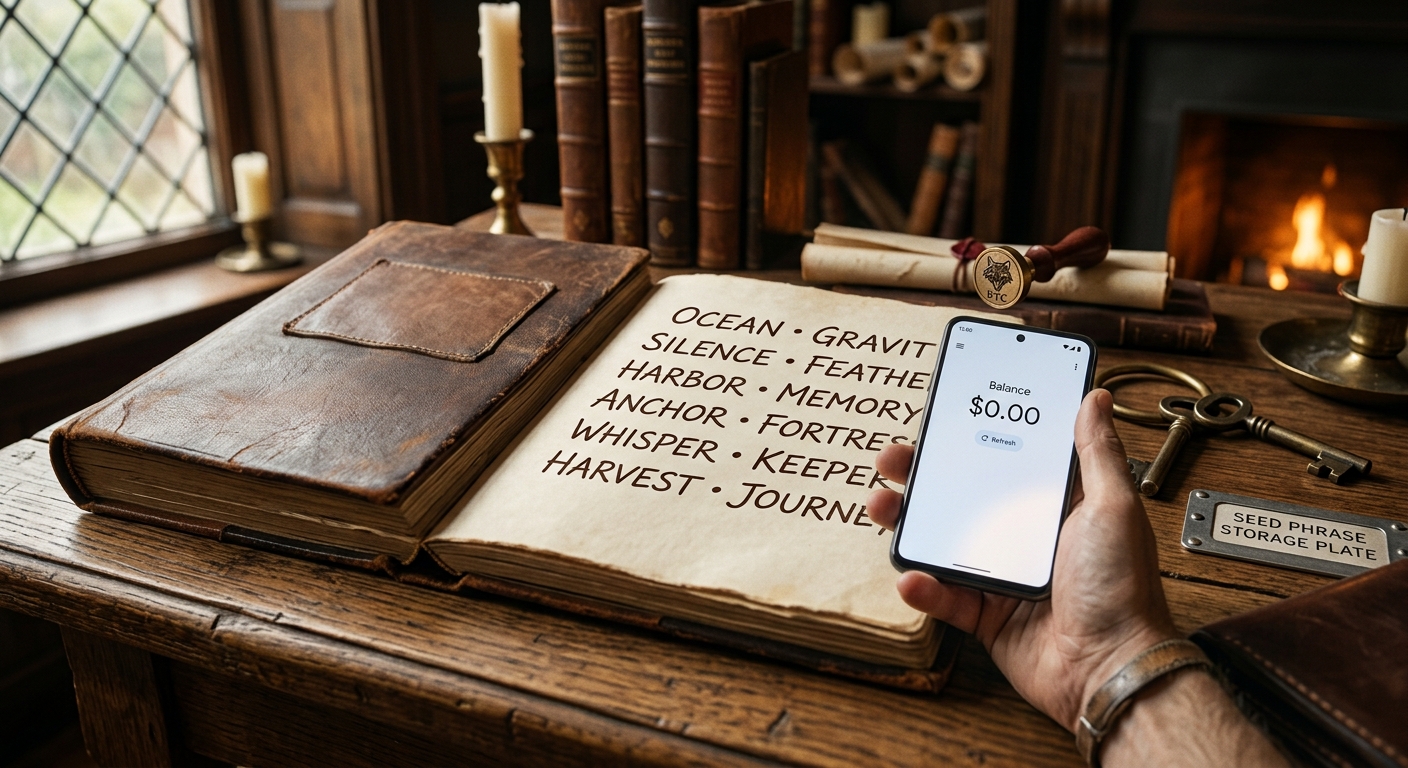
Ask any crypto expert what a passphrase is:
NAAAH. It's the difference between losing everything or not.
A passphrase is a password stored exclusively in your mind. It regenerates an entirely different wallet from the exact same recovery words.
What does this mean in practice? It means you can leave your 24-word seed phrase in plain sight on a metal plate, in a notebook, or anywhere else—and it still won't give access to your real wallet!
Mathematical Strength
How powerful is it mathematically? If you use 50 out of 95 readable ASCII characters, the search space yields:
Since a standard BIP-39 wallet key space is bounded by 2256 combinations, a passphrase of this length provides entropy that exceeds the entire wallet space itself. With your seed words and a passphrase, you can theoretically map to any possible wallet derivation.
You can truly leave your words in plain sight. It is the fundamental first step into plausible deniability and steganography.
The story some experts love to tell:
NO.
Wrong passphrase? Try again. And again. As many times as you want — there's no lockout counter like a PIN. Nothing gets wiped, nothing gets deleted.
Type the right one — today, tomorrow, next year — and you're back exactly where you left your funds.
Save your words. Save your PIN. Save your passphrase too. Treat it like any other secret you protect.
The Honeypot Strategy
You can deploy advanced defensive strategies like using multiple passphrases:
- No Passphrase (Default Wallet): Spare change. If your seed is stolen, this is all anyone sees.
- 1st Passphrase: Secondary wallet holding a moderate balance. If forced to reveal your passphrase, this is all anyone sees.
- 2nd Passphrase: Core wallet containing your main wealth.
Not Every Wallet App Gets It (Shame). But We Know a Trick!
Metamask is a widely used example: its Secret Recovery Phrase import only asks for your 12/24-word phrase — no passphrase field, anywhere.
NO PROBLEM!
Just import the private key for any chain generated by SeedGen (BTC, all EVM chains, all TRON chains). There are a LOT.
The passphrase is already inside the private key.
You can finally protect your wallet with a passphrase in your Metamask-like wallet app.